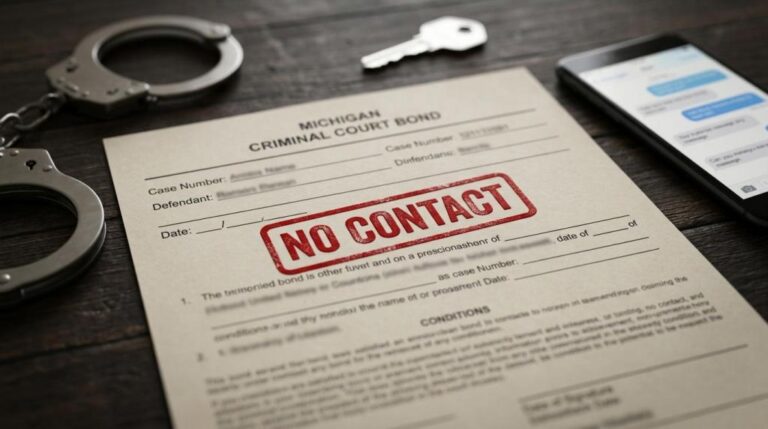


At Ben Hall Law, our East Lansing criminal defense lawyers understand that if you need to know how to bail someone out of jail in Michigan, you’re likely facing a stressful and urgent situation. This page covers the entire bail process in Michigan, including what bail is, the different types of bail and bond options available, and a step-by-step guide on how to bail someone out of jail. It is designed for people seeking to bail out a friend or loved one in Michigan, whether for a misdemeanor or felony charge. Understanding this process matters because it helps you secure release quickly and ensures you know your legal obligations and responsibilities after posting bail.
Bail is money posted to ensure a defendant appears in court. Bailing someone out of jail requires specific booking details and payment of the bail amount. Below, we’ll walk you through the bail process, explain the types of bail available in Michigan, and help you understand your options for securing a loved one’s release.
Step-by-Step Summary: The Bail Process in Michigan
Here’s a step-by-step summary of how to bail someone out of jail in Michigan:
- Contact the Jail: Call the jail where the person is being held to confirm their booking details and the bail amount set by the court.
- Verify Bail Amount and Conditions: Obtain the exact bail amount and any conditions for release from the jail or court.
- Choose a Payment Method: Decide whether to pay cash, use a bail bond company, deposit property, or seek release on recognizance.
- Complete Required Paperwork: Fill out all necessary forms and provide identification and payment as required by the jail or court.
- Wait for Release: After paperwork and payment are processed, wait for the jail to release the individual, which can take several hours.
Next, we’ll explain the general bail process in Michigan, so you know what to expect before exploring the different ways you can post bail or obtain a bail bond.
The Bail Process After Arrest in Michigan
After an arrest, the individual is usually taken to the county jail for booking. The general bail process includes the following steps:
- Arrest and Booking: The person is arrested and booked at the local jail, where their information and charges are recorded.
- Arraignment: Within 24 to 48 hours, the defendant appears before a judge for arraignment. The judge explains the charges and sets bail based on the alleged crime, flight risk, and public safety concerns.
- Bail Hearing: During the arraignment, the judge may hold a bail hearing to determine the bail amount and any conditions for release.
- Posting Bail: Once bail is set, you can post bail using one of several methods (explained below).
- Release: After bail is posted and paperwork is completed, the defendant is released from jail pending future court appearances.
This process is part of the broader bail system and what happens in the first 72 hours after an arrest in Michigan.
What are the Different Ways to Post Bail or Obtain a Bail Bond in Michigan?
Bail options in Michigan include cash bail, surety bonds, property bonds, and release on own recognizance. While an attorney is not required before posting bail, legal representation at arraignment can help during legal proceedings, including the bail hearing. An attorney can explain the charges and help you understand your rights, release obligations, and court requirements after release.
Below are the main types of bail and bond options available in Michigan:
Personal Recognizance (PR) Bond
Definition: Release on own recognizance means the defendant is released from jail without paying money, based on a promise to appear in court.
One of the first ways to solidify your release from jail is through a Personal Recognizance (PR) Bond. Judges may weigh issues like mental illness differently when mental health defenses in Michigan criminal cases are potentially involved. You may qualify for a PR bond if you were arrested for a nonviolent crime and do not have a criminal record. This option is generally reserved for people who present a minimal flight risk and are expected to make all future court appearances. Instead of posting bail, you sign a document promising to appear at all court hearings.
Cash Bond
Definition: Cash bail requires the full bail amount to be paid in cash to the court or jail to secure release.
With a cash bond, you or a co-signer submit the full bail money amount as cash bail. This type of bond is usually used for misdemeanor charges where the bond amount is under $5,000. Posted cash bail is generally returned when the defendant appears for required court appearances, though court costs may be deducted. In some cases, professionals must also consider how the underlying criminal charges could affect a professional license in Michigan.
Ten Percent Cash Deposit
Definition: A ten percent cash deposit bond allows you to pay 10% of the total bail amount to secure release, with the remainder owed if the defendant fails to appear.
This type of bond requires that ten percent of its value be deposited at the jail to secure release as another form of financial guarantee. For example, a $10,000 10% bond would require $1,000 in cash deposited at the jail.
Surety Bond
Definition: A surety bond involves a third party, such as a bail bondsman, who guarantees the defendant’s appearance in court for a fee.
A surety bond in Michigan guarantees that a defendant will appear in court. These typically involve a third party, like a bail bondsman or bonds agency, ensuring the defendant’s appearance. This is how bail bonds work through a bail bond company or bond company, and the bail bond process usually includes signing an agreement before release. Bail bondsmen typically charge a nonrefundable percentage of the total bail to secure the bond, and many people also turn to experienced defense attorneys like Ben Hall, a Michigan criminal defense lawyer, to help them navigate these decisions.
Property Bond
Definition: A property bond allows real estate to be used as collateral for bail, with the risk of foreclosure if the defendant fails to appear.
A property bond in Michigan guarantees that a defendant will appear in court as ordered. The defendant or their representative uses real estate as property deposited with the court to secure their release from custody, which can be especially concerning for people who are also trying to protect their professional license and career in Michigan. The property’s value must be close to the amount required as bail, and if the defendant fails to appear, foreclosure proceedings may follow in some cases.
Next, we’ll discuss how to choose the best option for getting released from jail in Michigan and what factors to consider.
What is the Best Option to Get Released from Jail in Michigan?
Working with a Defense Lawyer
Often, the best way to secure release from jail is to work with a skilled East Lansing criminal defense lawyer who can ask the court to release you without bail or request a lower bail amount at the bail hearing. Our defense attorney will ask the judge to grant release on your own recognizance by explaining your obligations, including employment, community ties, criminal history, financial resources, and facts showing you are not a flight risk and do not threaten public safety.
A defense lawyer can also help you understand the pros and cons of each bail option, guide you through the paperwork, and ensure you meet all court requirements after release. This support can make the process faster and less stressful for you and your loved ones.
Bail Conditions for Serious Charges
In certain circumstances involving serious or violent felonies, judges may impose stricter bail conditions or bond conditions to protect public safety, especially in jurisdictions like Lansing and Ingham County criminal courts. If the court does not release you on your own recognizance, you must consider other bail options, which may look different if your case is pending in Jackson, Michigan criminal courts.
We can help you evaluate those options and compare whether posting bail money directly or using a bail bond is the better option so you can secure release as soon as possible, whether your case is in East Lansing, Mason criminal courts, or elsewhere in Michigan.
Contact Our Criminal Defense Lawyer in Michigan Today
Contact our criminal defense lawyer in Michigan to discuss your case with trusted professionals who believe in you and your case by calling (877)-236-4255 or contacting us online to reach attorneys like Kara Thompson, a Michigan criminal defense lawyer.
Your fight is our fight. Let’s start today.